
WELCOME BONUS 200%
UP TO €1500 + 200
FREE SPINS
UP TO €1500 + 200
FREE SPINS
Home → Blackjack
Blackjack at Cashed Casino: Variants, Rules and Payouts
Continuous Shuffling Machine shuffles after each round
The Lightning Blackjack table by Evolution utilizes a Continuous Shuffling Machine to ensure immediate reshuffling. This mechanism eliminates card counting advantages and maintains a consistent deck composition for every dealt hand. Players face an RTP of 99.56% with multipliers up to 25x on winning hands, ensuring rapid gameplay cycles.
Quantum Blackjack Plus Live by Playtech employs similar continuous shuffling technology to facilitate its unique Quantum Multipliers. The system allows bets ranging from 1 EUR to 5,000 EUR while applying random modifiers to three-card combinations totaling 21 points. This technical approach supports an RTP of 99.57% when optimal strategy is applied during the live session.
Infinite Blackjack by Evolution also relies on automated shuffling to support its unlimited seating capacity at the virtual table. The game offers four side bets including Any Pair and Bust It, which are resolved instantly without manual dealer intervention. This ensures that the theoretical house edge remains stable regardless of the number of concurrent participants.
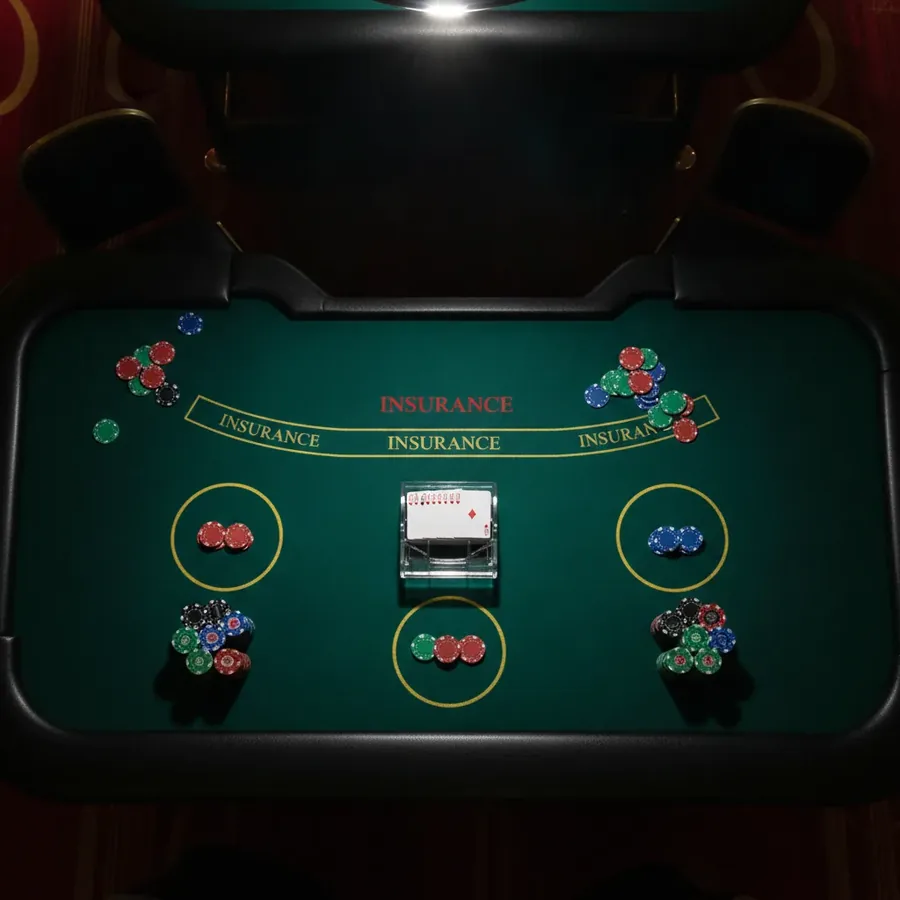
Check table limit before the first bet
Lightning Blackjack imposes a minimum stake of 1 EUR and a maximum limit of 2,500 EUR per round. This range accommodates both casual players and high rollers seeking exposure to the 25x Lightning Multiplier feature. Bettors must verify their balance covers the entry threshold before attempting to place a wager on the digital layout.
Quantum Blackjack Plus Live sets a higher ceiling with limits extending from 1 EUR up to 5,000 EUR. This wider variance allows significant capital deployment into the Quantum Multiplier system, which can drastically alter payout structures. Checking this upper bound prevents rejected transactions when attempting to maximize potential returns on specific hands.
Infinite Blackjack matches the Quantum variant with limits spanning 1 EUR to 5,000 EUR across its various betting zones. The table structure includes standard blackjack wagers alongside optional side bets like Hot 3 and 21+3. Verifying these specific caps ensures compliance with the platform's risk management protocols before any chips are committed.
Six Card Charlie Pays Immediately with Six Cards
Standard blackjack rules typically require reaching exactly 21 or beating the dealer to win, but some variants include special payouts. A Six Card Charlie rule automatically awards a win if a player draws six cards without busting, bypassing the final dealer check. This specific condition alters the strategic landscape by encouraging risk-taking on weak starting totals.
Live dealer tables often exclude such non-standard rules in favor of strict mathematical models like those found in Infinite Blackjack. The standard RTP of 99.47% assumes conventional drawing patterns rather than arbitrary hand-length bonuses. Players relying on Six Card Charlie strategies may find their expected value reduced if the specific table does not support this mechanic.
Evolution's Lightning Blackjack focuses on multiplier effects rather than alternative win conditions like the Six Card Charlie. The game prioritizes the 25x Lightning Multiplier on natural blackjacks or high-value hands over complex drawing rules. Consequently, the house edge calculation remains tied to traditional basic strategy outcomes rather than bonus hand achievements.
Which table limits suit 20 EUR balance?
A 20 EUR balance comfortably fits within the minimum stakes of all three featured live blackjack variants. Each table accepts starting bets as low as 1 EUR, allowing for twenty initial rounds of play without depositing additional funds. This entry level provides sufficient opportunity to test the mechanics of the Continuous Shuffling Machine and observe multiplier frequencies.
However, the 2,500 EUR cap on Lightning Blackjack and the 5,000 EUR cap on Quantum and Infinite tables remain irrelevant for this bankroll size. Players cannot access high-stakes tiers or utilize large-scale betting systems like the Martingale due to the limited capital available. The focus shifts entirely to low-variance play to extend the duration of the gaming session significantly.
Side bets such as Any Pair or Bust It in Infinite Blackjack require separate allocations from the main game stake. With only 20 EUR total, allocating funds to these auxiliary wagers reduces the resilience against standard losing streaks. Maintaining the primary blackjack wager at the minimum 1 EUR level preserves the majority of the balance for core gameplay.
Live stream with three cameras and OCR
Evolution's Infinite Blackjack utilizes a sophisticated camera setup to capture the dealing process and distribute cards digitally. Optical Character Recognition (OCR) technology translates physical card movements into data for the software interface instantly. This integration ensures that the displayed RTP of 99.47% reflects accurate real-time outcomes without latency or manual input errors.
Playtech's Quantum Blackjack Plus Live employs similar optical recognition to trigger the Quantum Multiplier events randomly. The system identifies specific card combinations totaling 21 points and applies modifiers up to 1,000x automatically. This technological layer guarantees that the 99.57% RTP figure is maintained through precise algorithmic execution rather than human error.
Lightning Blackjack by Evolution integrates its own proprietary camera and OCR pipeline to handle the Lightning Multiplier generation. The system assigns random multipliers between 2x and 25x to specific cards before the deal begins, visible via the stream. This transparent visual confirmation allows players to trust the integrity of the 99.56% return-to-player statistic.
Blackjack variants at a glance
| Variant | Payout | House edge | Rule | Bet range |
|---|---|---|---|---|
| Blackjack 6 Decks, S17, DAS, DOA, Auszahlung 3:2, Basisstrategie | 99.54% | 0.46% | Dealer steht auf Soft 17; Verdopplung auf jeder Zweierkarte; Verdopplung nach Split erlaubt; keine Aufgabe. Basisstrategie ist für diesen Wert zwingend | Blackjack 3:2, normaler Gewinn 1:1, Insurance 2:1 |
| Blackjack Liberal Vegas Strip (liberale Regeln, 3:2) | 99.72% | 0.28% | Günstigste Regelkombination: S17 + DAS + Resplit + Late Surrender. Standardabweichung 1,15 | Blackjack 3:2, Gewinn 1:1 |
| Blackjack Split / Double / H17 – Regel-Effekte | n.a. (Regel-Modifikatoren) | H17 +0.22 Prozentpunkte; RSA −0.08 Prozentpunkte; DAS −0.14 Prozentpunkte | Dealer Hits Soft 17 verschlechtert RTP um 0.22 Prozentpunkte; Resplit Aces verbessert um 0.08 Prozentpunkte; Double After Split verbessert um ca. 0.14 Prozentpunkte; 6 Decks statt 8 – ca. 0.02 Prozentpunkte. | Double – Einsatz ×2 mit einer Karte; Split – bis 4 Hände; Ass-Split meist mit einer Karte. |
| Blackjack Surrender (Late Surrender) – Regel-Effekt | n.a. (Regel-Modifikator) | −0.08 Prozentpunkte | Spieler gibt Hand nach Dealer-Blackjack-Prüfung auf, verliert die Hälfte des Einsatzes. Verbessert RTP um ca. 0.08 Prozentpunkte. Early Surrender ist wesentlich wertvoller (bis −0.6 Prozentpunkte), aber extrem selten. | Rückzahlung 50% des Einsatzes |
| Blackjack Auszahlung 6:5 statt 3:2 (6 Decks) | 98.15% | 1.85% | Ersatz von 3:2 durch 6:5 fügt exakt +1.39 Prozentpunkte zum Vorteil des Casinos hinzu – stärker als jede andere Regeländerung. Bei $10 Einsatz zahlt Blackjack $12 statt $15. | Blackjack 6:5, Gewinn 1:1 |
| Blackjack Insurance / Versicherung (6–8 Decks) | 92.53% | 7.47% | Separate Nebenwette bis 50% der Hauptwette, wenn der Dealer ein Ass hat. Basisstrategie schreibt IMMER Ablehnung vor (außer Karten zählen bei True Count ≥ +3). Bei einem Deck Vorteil ≈ 5.88% | Insurance 2:1 |
When does the table max bet apply?
Lightning Blackjack imposes a maximum stake of 2,500 EUR per round. This ceiling is half the limit of Quantum Blackjack Plus Live, which allows wagers up to 5,000 EUR. Consequently, high rollers must adjust their betting volume by splitting stakes across multiple hands or tables.
Infinite Blackjack also features a 5,000 EUR upper boundary for single bets. While this matches the Playtech provider's cap, it differs from the lower threshold found in Evolution's Lightning variant. Players seeking higher exposure must verify the specific table limits before joining any seat.
Standard Blackjack variants without live dealers often have different structural constraints compared to these streamed games. The fixed monetary caps ensure that side bets remain within acceptable risk parameters for the operator. Understanding these distinct limits prevents accidental rejections during active play sessions.
Insurance Pays 2:1 Yet Still Costs Money
Blackjack Insurance offers a separate wager paying 2:1 if the dealer holds a ten-value card. Despite this favorable payout ratio, the house edge sits at a steep 7.47 percent on standard six-to-eight deck shoes. This negative expectation makes the side bet mathematically unsound for the average player.
The Return to Player (RTP) for this insurance bet is recorded at 92.53 percent, significantly below standard game rules. By comparison, playing with basic strategy yields an RTP of 99.72 percent on Liberal Vegas Strip. The substantial gap illustrates how accepting insurance erodes long-term bankroll stability.
Basic strategy explicitly mandates rejecting insurance unless the player counts cards and reaches a true count of +3 or higher. In single-deck scenarios, the advantage drops slightly to approximately 5.88 percent but remains unfavorable. Most players ignore this rule, resulting in a consistent mathematical loss over time.
What Peek Means with a Dealer Ace
Late Surrender allows players to forfeit half their bet after the dealer checks for blackjack. This rule modifier improves the player's RTP by exactly 0.08 percentage points compared to tables lacking this option. It provides a safety net when holding weak hands against a potential dealer natural.
Early surrender, though more valuable with up to a 0.6 percent improvement, is extremely rare in modern online environments. The late variant requires the dealer to first verify they do not hold an ace or ten, protecting the player's remaining stake. This sequence defines the critical timing window for executing the surrender action correctly.
Tables offering Late Surrender typically feature stricter other rules, such as standing on soft 17, to balance the advantage. The combined effect of S17 and Late Surrender creates a specific mathematical profile distinct from early surrender tables. Players must evaluate whether the reduced house edge justifies the limited availability of this rule set.
Statistics display saves the last 100 rounds
Quantum Blackjack Plus Live displays historical data covering the previous 100 completed hands for analytical purposes. This log includes outcomes relevant to the quantum multipliers applied to three-card combinations totaling 21 points. Tracking these results helps players monitor variance patterns over short intervals.
The statistical retention period applies equally to Infinite Blackjack, where Evolution records the last 100 rounds of activity. These statistics often inform decisions regarding the four available side bets like Any Pair or Bust It. Accessing this history is essential for verifying the fairness of recent multiplier applications.
Unlike slots, where volatility spikes can occur randomly, table games show immediate feedback through these visible logs. The 100-round window provides a sufficient sample size to detect deviations from expected probabilities. Players relying on pattern recognition should prioritize tables that maintain transparent and accessible historical records.
Place Side Bet before cards are dealt
Side bets in Lightning Blackjack require placement before the initial deal to qualify for lightning multipliers up to 25x. Missing this deadline excludes the hand from receiving any enhanced payouts regardless of the final result. The strict timing ensures that all participants face identical conditions before the dealer distributes cards.
In Infinite Blackjack, placing wagers on Hot 3 or 21+3 must occur prior to the card distribution phase. Failure to commit funds within the designated window renders the side bet void for that specific round. This protocol maintains game integrity by preventing post-deal adjustments based on revealed information.
Standard Blackjack rules prohibit altering side bet amounts once the dealing sequence has commenced. This restriction applies uniformly across all live dealer providers including Playtech and Evolution. Adhering to pre-deal betting windows is mandatory to ensure eligibility for any associated prizes or bonus triggers.
Splitting tens costs expected value: better stand
The Blackjack 6 Decks variant offers a standard payout of 3:2 for a natural hand, which pays out at 1.5 times the wager amount. This favorable ratio is essential for maintaining the game's low house edge of 0.46% when players adhere to basic strategy rules strictly. Deviating from this strategy significantly increases the casino's advantage over time. Players must ensure they understand these payouts before sitting down.
Splitting ten-value cards creates two separate hands starting with ten, but basic strategy generally advises against this move in most scenarios. The potential loss of the 3:2 payout on a single strong hand outweighs the marginal gain of playing two weaker hands. Keeping the pair together preserves the higher probability of winning that specific hand. This decision impacts the overall return rate negatively if executed incorrectly.
The Lightning Blackjack table by Evolution allows bets between 1 and 2,500 EUR with multipliers up to 25x on winning hands. While exciting, the core blackjack rules remain similar to the base game, requiring disciplined play to maximize returns. The RTP here stands at 99.56%, slightly higher than the standard version due to bonus features. Understanding the bet limits helps manage bankroll effectively during high-variance sessions.
How many decks are in the shoe?
The standard Blackjack 6 Decks game utilizes six shuffled decks to determine card distribution probabilities throughout the shoe. Using fewer decks typically lowers the house edge, as seen in the one-deck variant which offers an RTP of 99.85%. Conversely, increasing the deck count to eight usually raises the house advantage slightly due to increased combinatorial complexity. This structural choice directly influences the mathematical expectation for every hand dealt.
Infinite Blackjack by Evolution accommodates unlimited players at the table, often using continuous shuffling machines or multiple shoes to maintain pace. The game supports four side bets including Any Pair and 21+3, which have distinct RTPs compared to the main game. The main game RTP is 99.47%, while side bets carry much higher house edges. Players should focus on the main game odds for better long-term value.
Quantum Blackjack Plus Live by Playtech also operates with a multi-deck shoe, allowing wagers from 1 to 5,000 EUR. Quantum multipliers can affect up to three cards, potentially boosting wins significantly without altering the underlying deck composition logic. The RTP remains at 99.57% when optimal strategy is applied consistently across all rounds. Deck penetration and shuffling frequency impact the predictability of card removal effects.
Mobile version needs 1 Mbit bandwidth
Streaming live dealer games like Lightning Blackjack requires stable internet connectivity to prevent disconnections during critical betting windows. A minimum bandwidth of 1 Mbit ensures smooth video transmission from the studio to the mobile device interface. Insufficient bandwidth may cause latency, leading to missed bets or delayed card reveals. Users should verify their connection speed before joining high-stakes tables with limits up to 2,500 EUR.
The Infinite Blackjack interface adapts to smaller screens while maintaining access to all side bet options such as Hot 3 and Bust It. These side bets offer different payout structures but significantly increase the house edge compared to the base game. Maintaining a clear view of the table layout is crucial for tracking card values accurately. Slow connections might obscure visual cues necessary for making informed split or double decisions.
Playtech's Quantum Blackjack Plus Live delivers high-definition streams that consume more data due to enhanced graphical overlays and multiplier animations. The game's RTP of 99.57% assumes perfect information availability, which relies on uninterrupted video feeds. Data caps on mobile plans could restrict session length if users exceed their allowance. Monitoring data usage helps avoid unexpected charges while engaging with these technically demanding live tables.
What doesn't count as Blackjack after Split?
When splitting pairs, each new hand starts independently, meaning a resulting twenty-one is not classified as a natural Blackjack paying 3:2. Natural blackjacks only occur when the initial two cards total twenty-one without any splits involved. This distinction is vital because split twenty-pays typically win at even money (1:1) rather than the premium blackjack rate. Players must adjust their expectations regarding payout amounts for these specific outcomes.
The Liberal Vegas Strip variant allows resplitting Aces, which further complicates the definition of a natural hand in some rule sets. Even if a player achieves twenty-one after splitting, the payout remains standard unless specified otherwise by the specific table rules. The house edge of 0.28% reflects these nuanced payout structures compared to stricter variants. Understanding these exceptions prevents confusion when calculating potential winnings from split hands.
Insurance bets are separate wagers that pay 2:1 if the dealer has a blackjack, regardless of whether the player's hand was split. This side bet does not alter the classification of the main hand's outcome or its corresponding payout structure. Accepting insurance when the dealer shows an ace carries a high house edge of 7.47%. Players should evaluate the true count before considering this option to minimize losses.
What Push Means: Stake Returns to You
A push occurs when the player's hand total equals the dealer's final hand total, resulting in no win or loss for either party. In this scenario, the original stake is returned to the player without any interest or additional payment. This outcome effectively neutralizes the round, contributing to the overall RTP calculation over thousands of hands. Players should recognize pushes as non-events that preserve their bankroll intact.
The Surrender rule allows players to forfeit half their bet early, avoiding a potential loss against a strong dealer hand. While this reduces the immediate stake, it improves the overall RTP by approximately 0.08 percentage points compared to playing out the hand. Late surrender is available after the dealer checks for blackjack, whereas early surrender is rare and more valuable. Utilizing this option strategically can mitigate variance in unfavorable situations.
Blackjack games with a 6:5 payout structure instead of 3:2 significantly increase the house edge to 1.85% compared to 0.46%. This change affects all natural blackjacks, reducing the payout from 150% to 120% of the wager. Pushes remain unaffected by this rule change, but the reduced win rate makes the game less profitable. Avoiding 6:5 tables is crucial for maintaining a lower house advantage.
Contact
Live - online chat
Banking









Providers












Cashed Casino 2024